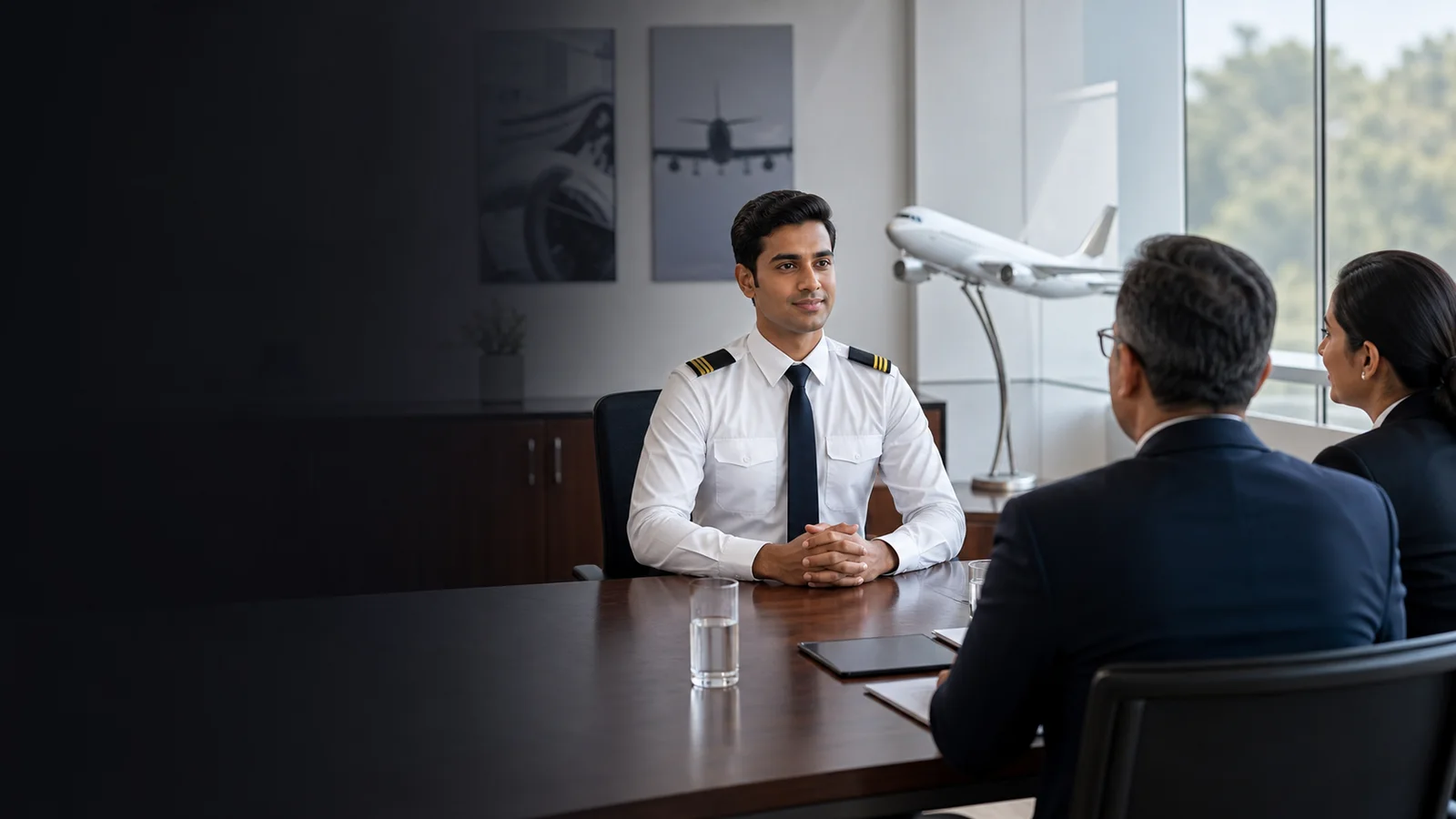
What the panel is really assessing
Correct facts matter, but a strong interview answer also shows how you think, communicate, prioritise, and respond when the panel changes direction.
Professional clarity
Can you answer the exact question, organise the response, and stop before the answer becomes a speech?
Technical command
Can you explain a system from purpose to operational consequence without guessing or hiding behind jargon?
Operational judgement
Can you prioritise flight path, procedures, communication, and crew coordination when the situation changes?
Trainability
Can you recognise limits, accept correction, and show a disciplined method when you do not know something?
Prepare in the order the interview develops
Airline selection processes vary. This sequence covers the capabilities most candidates need to demonstrate across personal, technical, and scenario stages.
- 01
Personal and airline fit
Expect a concise introduction, motivation, training history, strengths, development areas, teamwork, and evidence that you understand the airline and role.
Prepare truthful examples, not memorised personality claims. - 02
Technical foundations
Revise flight planning, performance, aerodynamics, weather, navigation, regulations, and the aircraft knowledge relevant to the position.
Practise explaining one concept at a time in plain operational language. - 03
Aircraft systems and philosophy
For an A320 role, move beyond component recall into indications, interactions, limitations, automation discipline, task sharing, and ECAM philosophy.
Use the current approved manuals for procedure wording and limitations. - 04
Scenarios and pressure
Abnormal situations, mental maths, follow-up questions, and rapid recall reveal how you prioritise and communicate when time is limited.
Answer aloud under a timer and debrief the structure afterwards.
431 real-world airline interview questions across seven sections
The practice workspace keeps every section chronological, so you can build a foundation before moving into deeper technical and pressure-based questions.
Personal and fit
Answer only the question asked. Keep each response truthful and appropriately scoped; motivation, strengths, and detailed stories have their own place later in the sequence.
- Background
- Training and experience
- Motivation
- Strengths and development
- CRM and teamwork
- Resilience and wellbeing
- Closing the interview
A320 systems
Work through A320 systems questions in a fixed order, from electrical and hydraulics to flight controls, indications, operating practices, and limitations.
- Electrical power
- Hydraulics
- Landing gear and brakes
- APU and fuel
- Flight controls and warnings
- Automation, guidance and navigation
- Aircraft systems and operating practices
- Operating limitations
- Air and pressurisation
- Engines and start
- Normal flight and automation
A320 operating philosophy
Build the operating logic behind the procedures: cockpit principles, Golden Rules, automation discipline, PF/PM coordination, briefings, checklists, and ECAM philosophy.
- Cockpit philosophy
- Golden Rules
- Task sharing and controls
- Communication and briefings
- Procedures and checklists
- ECAM philosophy
Flight planning and theory
Practise one concept at a time in a fixed order, moving from performance through navigation and charts to aerodynamics and propulsion.
- Takeoff performance
- Runway and landing performance
- Fuel planning and alternates
- Navigation foundations
- Altimetry
- Radio and airspace
- Procedural navigation
- Weather and approach charts
- PBN and RVSM
- Aerodynamics
- Propulsion and aircraft recognition
Abnormal scenarios
Practise urgent-situation recognition, crew coordination and decisions, then explore ECAM handling, diversions, rejected takeoff, engine failures, windshear, decompression and approaches.
- Urgent situations
- ECAM and abnormal management
- Diversion and rejected takeoff
- Engine failures
- Windshear and protections
- Unreliable speed
- Decompression
- Approach decisions
- Everyday decisions
Rapid fire
Practise composure in a stable order: calculation, recall, positional reasoning, and plain-language explanation.
- Pressure method
- Aviation mental maths
- Recall and reasoning
- Clear communication
CPL foundations
Start with the aircraft you flew, everyday operating decisions and the fundamentals that carry into an airline cockpit.
- Your aircraft & experience
- Loading & performance
- Weather & instruments
- Ground & navigation
- Fitness & dispatch
Airline-specific preparation
Prepare for your chosen airline with concise company facts, practical role guidance and sources you can recheck before interview day.
- IndiGo company knowledge
- IndiGo role & preparation
- Air India company knowledge
- Air India role & preparation
- Akasa company knowledge
- Akasa role & preparation
Frame the answer before filling it
Rehearse the order of each answer, not a script. The structure should remain stable while the wording stays natural and truthful.
01Introduce yourself.
- What it assesses
- A calm, relevant opening and your ability to control scope.
- How to structure it
- Name and present qualification, current training or flying position, one relevant experience signal, and where you are professionally now. Keep it to roughly 30-45 seconds unless the panel asks for more.
- Common mistake
- Do not answer your entire life story, why aviation, strengths, and why this airline inside the opening question.
“Good morning. My name is Arjun Mehta. I completed my CPL training in India and hold a current Class 1 medical and A320 type rating. My training strengthened my preparation discipline and crew coordination, and I am now ready to begin airline operations as a first officer.”
02Why aviation?
- What it assesses
- Whether your motivation is personal, informed, and durable.
- How to structure it
- Explain when the interest became a serious career decision, what you learned about the realities of the profession, the concrete steps you took, and why the work still fits you.
- Common mistake
- Do not invent a discovery-flight story or claim that flying has been your dream since childhood unless that is genuinely true.
03Explain an abnormal situation you faced in flight and how you handled it.
- What it assesses
- Prioritisation, CRM, procedural discipline, situational awareness, and honest reflection.
- How to structure it
- Set the aircraft and phase of flight, state the abnormal cue, explain your immediate priorities, show how the crew shared tasks and used procedures, give the outcome, and finish with one specific lesson.
- Common mistake
- Do not exaggerate the event, take sole credit for a crew response, or recite actions that were not actually performed.
04Explain an A320 system.
- What it assesses
- Depth, sequence, and whether you connect technical knowledge to operation.
- How to structure it
- Start with the system purpose, then sources and major components, normal operation, cockpit indications, and failure effect. Add crew action only when the question asks for it.
- Common mistake
- Do not list disconnected components or continue into every failure case after the original question has been answered.
05State the memory-item actions for a failure.
- What it assesses
- Accurate recall under pressure and respect for approved procedure wording.
- How to structure it
- Identify the condition, make the required callout where applicable, and state only the boxed memory actions verbatim from the current approved document.
- Common mistake
- Do not paraphrase memory items, mix in the full follow-on procedure, or use wording from an aircraft or operator standard that does not apply to you.
Turn the question bank into a preparation schedule
Adjust the pace to your interview date and current aircraft knowledge. Keep the final days for spoken recall and full mocks, not first-time reading.
- Days 1-2
Map the interview
Confirm the likely stages, required documents, fleet, role, and your current weak areas. Record a baseline mock without notes.
- Days 3-4
Build personal answers
Prepare your introduction, motivation, training history, strengths, development areas, teamwork examples, and abnormal-flight story.
- Days 5-7
Rebuild A320 systems
Work system by system. Answer aloud using purpose, architecture, normal operation, indication, failure effect, and limitation.
- Days 8-9
Refresh planning and theory
Revise performance, navigation, weather, charts, aerodynamics, propulsion, and the formulas you must calculate mentally.
- Day 10
Connect operating philosophy
Review Golden Rules, automation discipline, PF/PM task sharing, briefings, checklists, and normal versus abnormal ECAM duties.
- Days 11-12
Run abnormal scenarios
Practise memory-item recall, ECAM management, diversion logic, rejected takeoff, engine failure, windshear, decompression, and approach decisions.
- Day 13
Add time pressure
Use rapid-fire recall and aviation mental maths. Say the formula, calculation, unit, and reasonableness check aloud.
- Day 14
Complete a full mock
Dress as you will attend, remove notes, record the session, and review accuracy, answer length, voice, posture, and recovery after follow-ups.
Start with Personal and fit, then move in sequence.
Your saved and completed questions remain available as you work through each section.
Know when you are ready to mock
Ready
- You can answer aloud without reading notes.
- You stop after answering the question asked.
- You can explain technical topics in a stable sequence.
- You recover calmly when a follow-up exposes a gap.
- Your memory items match the current approved wording.
Needs another pass
- Your answers depend on memorised paragraphs.
- You add procedures and limitations that were not asked.
- Your personal examples change under follow-up questions.
- You guess rather than state the limit of your knowledge.
- You have only read answers and have not spoken them.
Airline pilot interview preparation FAQ
What questions are asked in an airline pilot interview?
The mix varies by airline and role, but preparation normally covers personal fit, training and experience, technical theory, aircraft systems, limitations, operating philosophy, abnormal scenarios, CRM, company knowledge, and rapid recall or mental maths.
Are these real airline interview questions?
They are realistic, real-world practice questions built around common airline selection themes. AvioQuiz does not claim that every question is a verbatim confidential question from a specific airline interview.
How long should my introduction be?
A focused opening is usually about 30-45 seconds. Give your present professional position and the most relevant context, then stop. Motivation, strengths, training stories, and airline fit should remain available for their own questions.
Should I memorise sample interview answers?
No. Memorise the structure and the facts you need, not another candidate's wording. A panel can follow up on any claim, and copied answers quickly become inconsistent with your real training and experience.
How should I prepare A320 technical answers?
Use the current approved manuals that apply to your operation. Build each answer in a stable sequence: purpose, architecture, normal operation, indications, failure effect, limitation, and procedure only when asked. Memory items must be recalled verbatim.
Is the AvioQuiz interview question bank free?
The preparation page and sample method are public. Full access to all 330 chronological questions and answer guidance is included with AvioQuiz Pro.